


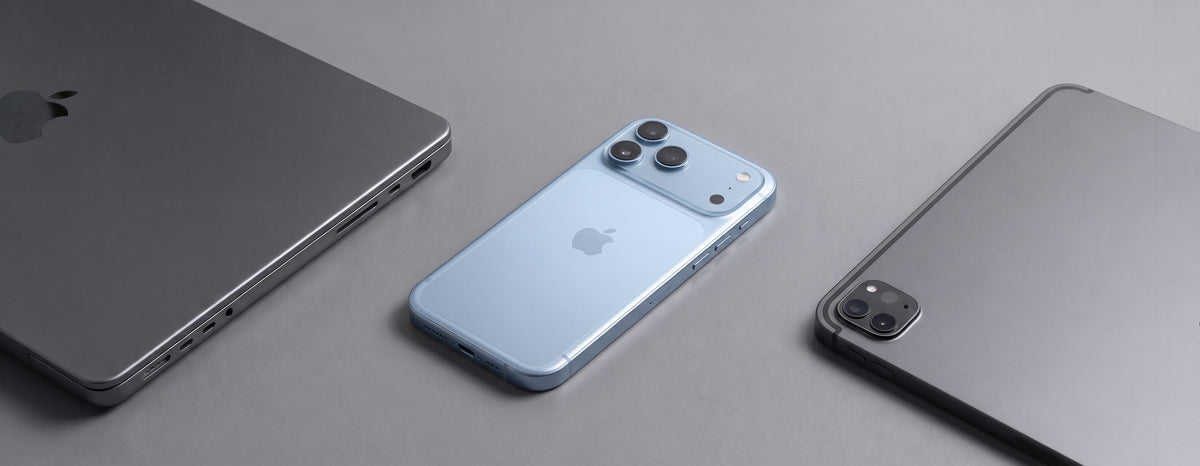
A faster iPhone deserves a charging setup that can keep up. But when choosing a charger for the iPhone 18 Pro, looking at wattage alone may no longer be enough.
Apple specifies that the iPhone 18 Pro can charge to approximately 50% in around 15 minutes when paired with a 60W-capable power adapter or higher that supports Adjustable Voltage Supply (AVS), along with a compatible USB-C charging cable. This makes charger protocol compatibility an essential factor for anyone looking to maximize real-world charging speeds.
So, what is AVS, does your phone actually require a 60W adapter at all times, and how should you select the right charging gear?
Explore Apple's Official iPhone 18 Pro Technical Specifications
What Is Adjustable Voltage Supply (AVS)?
Adjustable Voltage Supply (AVS) is an advanced power protocol introduced as part of the USB Power Delivery (USB-PD) 3.1 specification. It allows a compatible power adapter to dynamically fine-tune its output voltage in small increments within supported ranges, rather than being locked into static legacy voltages (such as 5V, 9V, 15V, or 20V).
Instead of relying only on the maximum wattage printed on a charger, AVS compatibility is the technical standard that truly controls how efficiently power enters your iPhone.
Key Takeaway: A higher wattage rating on a charger does not automatically guarantee Apple's fastest charging rate. To hit the advertised 15-minute 50% benchmark, the adapter must explicitly support the required AVS protocol under USB-PD 3.1, and the cable must be rated for the intended power load.
Does the iPhone 18 Pro Need a 60W Charger?
Strictly speaking, no—a 60W charger is not required for everyday charging, but it is necessary to unlock Apple's top-tier wired charging benchmark.
The iPhone 18 Pro remains fully backward-compatible with lower-wattage USB-C adapters (such as 20W, 30W, or 45W). However, these lower-output bricks will charge your battery at standard speeds.
Before purchasing a new charger for your iPhone 18 Pro, verify these three essentials:
- AVS Support: Confirm that the power adapter explicitly supports Adjustable Voltage Supply under USB-PD 3.1 specifications.
- Output Profiles: Check the supported power profiles to ensure the single USB-C port can continuously deliver at least 60W.
- Cable Power Rating: Ensure your USB-C cable is certified for 60W (3A) or 100W/240W (5A) to prevent throughput bottlenecks.
Wired vs. Wireless Charging: Comparison & Benchmarks
Both charging methods serve distinct daily routines. Understanding their specific requirements helps you pick the right accessory for your lifestyle.
| Charging Method | Required Equipment | Time to 50% | Best Everyday Use Case |
|---|---|---|---|
| Wired Fast Charging | 60W+ USB-PD 3.1 AVS Adapter + USB-C Cable | ~15 minutes | Rapid battery top-ups before heading out or traveling |
| MagSafe Wireless | 35W+ Adapter + MagSafe Charger (up to 25W) | ~30 minutes | Desk setups, nightstands, and convenient hands-free viewing |
| Qi2 Wireless | Certified Qi2 Wireless Pad (up to 25W) | Varies | Cable-free cross-platform convenience at workstations |
Choosing a Wired Charging Setup for iPhone 18 Pro
Wired charging remains the most dependable option when you need to top up your battery between meetings, during brief office breaks, or right before heading out.
However, power is only half the equation—everyday ergonomics and cable durability matter just as much. A high-quality, flexible cable allows you to use your device comfortably without straining ports, even if your outlet is positioned far from your desk.
The Tunova Fluid Cable is built for flexible, everyday USB-
How to Charge iPhone 18 Pro Faster: What Charger Do You Actually Need?
Perkiraan Harga MacBook Pro OLED di Indonesia & Spesifikasi Lengkap